Dirty Truth About Hand Washing
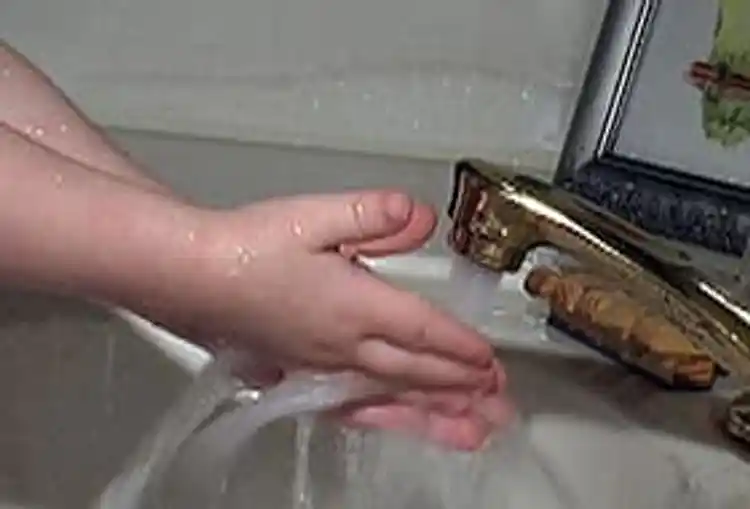
Hide Video Transcript
Video Transcript
Narrator
A menace is lurking beyond this door…a menace that if not brought into check could come looking for you! What is it? Well, according to recent surveys, more men than women are leaving the restroom without washing their hands. The bigger problem? No one—from women to men to doctors to food workers — washes up properly. Brunilda Nazario, MD
I think we're all guilty of not washing our hands as frequently as we should and it's probably the most important thing you can do to prevent yourself from getting sick. Narrator
Key times to wash up according to the centers for disease control and prevention: after handling pets, before eating, after going to the bathroom, and especially after contact with someone who's sick. Brunilda Nazario, MD
The germs are on your hands and either you're touching your nose, you're touching your eyes or somehow you've had your hands in your mouth… There are a number of things that you can transmit by not washing your hands frequently
the cold virus, there's the hepatitis virus, but certainly there are bacteria that can cause diarrhea. Narrator
Other flash points for viruses and bacteria: anywhere food is prepared or served. Always exercise care when handling raw eggs, meats and poultry. Brunilda Nazario, MD
A lot of times you're preparing meat. You can certainly transfer some bacteria from meat to salad, for example, so it's a good idea to not only wash your hands before but also while you are preparing food, also after and of course before you sit to eat. Narrator
Proper hand washing is not a quick rinse. Webmd's Paul Marsico, a registered nurse, demonstrates: Paul Marsico, a Registered Nurse
I like to make sure when I wash my hands I give plenty of time…warm soapy water and lots of friction…and make sure you get all the areas of your hands, make sure you get the backs of your hands, in between your fingers, down the sides, I get up my wrists a little bit and I also get under my fingernails. And I don't want to re-contaminate my hands so I'll use the towel then turn it off. Brunilda Nazario, MD
There are situations where there is no water—if you're traveling or you're at a picnic, what do you do then? I frequently recommend hand wipes or even those gels, those handy pack gels that contain alcohol. Those can easily kill germs. Narrator
Bear in mind that sometimes water can breed more germs than it kills. And it's times like those when you should just keep your hands to yourself. For WebMD, I'm Damon Meharg.